
back to resourcesTechnical Guide
The complete guide to data center structured cabling.
- published
- 2024-12-15
- read_time
- 12 min
- author
- Wave2Wave Technical Team
- reviewer
- Mark Crandon, CEO
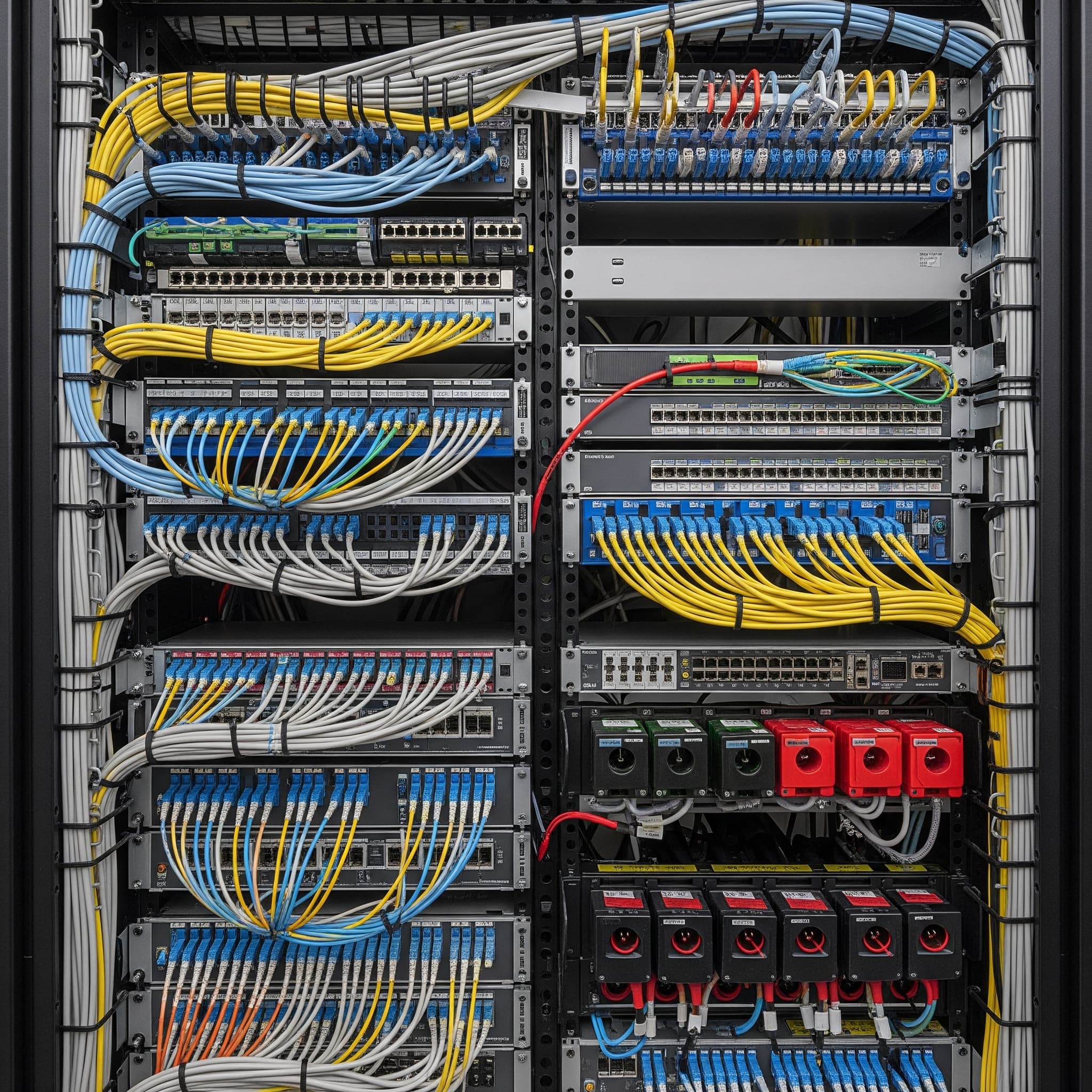
structured-cabling.jpegfiber · ethernet · patch_panels
01Fiber optic systems: technology and products
Fiber optics enable high-speed data transmission with minimal signal loss. Data centers use both multi-mode and single-mode fiber:
- —Multi-mode (OM3, OM4, OM5): Ideal for short-distance, high-speed links (up to 400G in some cases). Lower-cost transceivers.
- —Single-mode (OS2): Supports long-distance transmission (up to 40 km and beyond). Required for DWDM and high-density spine-leaf fabrics.
Fiber products include:
- —Pre-terminated trunk cables (MTP / MPO)
- —Fanout / breakout cables (MTP to LC)
- —Fiber cassettes and patch panels
- —Rack-mounted fiber enclosures
- —Optical transceivers (SFP+, QSFP28, QSFP-DD, OSFP)
- —Test and inspection tools (OTDR, power meters, fiber scopes)
02Ethernet infrastructure: technology and products
Ethernet still plays a critical role in modern networks — particularly within the rack:
- —Cat6A: 10Gbps up to 100m; shielded or unshielded
- —Cat8: 25Gbps and 40Gbps up to 30m; ideal for short top-of-rack links
- —Modular patch panels: easy reconfiguration
- —Field-terminated plugs: flexible for custom lengths
- —Color-coded patch cords: simplifies troubleshooting and change management
03Deployment logistics: kitting, labeling, efficiency
One of the most overlooked but impactful factors in structured cabling is how your components arrive at the job site. Efficient deployment reduces installation time, labor costs, and human error.
Why kitting matters
- —Receive all components per rack rather than by type
- —Eliminate time spent sorting through mixed hardware
- —Each box labeled with rack ID, U-position, server/device type
- —Include installation map, labeling guide, and port diagram
04Best practices
- —Use color-coded cables (e.g., blue for Ethernet, yellow for SM fiber, aqua for MM fiber)
- —Use pre-printed port labels and cable flags
- —Include slack management and cable support accessories
- —Deliver cassettes and trunks pre-labeled and polarity verified
// related_articles
Related articles.
Best Practices
Fiber Optic Cable Management Best Practices
Learn essential techniques for managing fiber optic cables in data center environments.
Technical GuideUnderstanding Cat6A vs Cat8 for High-Speed Networks
Compare the performance characteristics and use cases for Cat6A and Cat8 cabling.
Product pageFiber Cables for Data Centers
MTP/MPO trunks, LC patch cords, breakouts, and FTTH — engineered for data-center performance.
Product pageCopper Ethernet Cables
Cat6A and Cat8 assemblies for high-speed structured-cabling deployments.
// need_help
Need help with your structured cabling project?
Our structured cabling experts can help you design and implement a solution that meets your specific requirements.